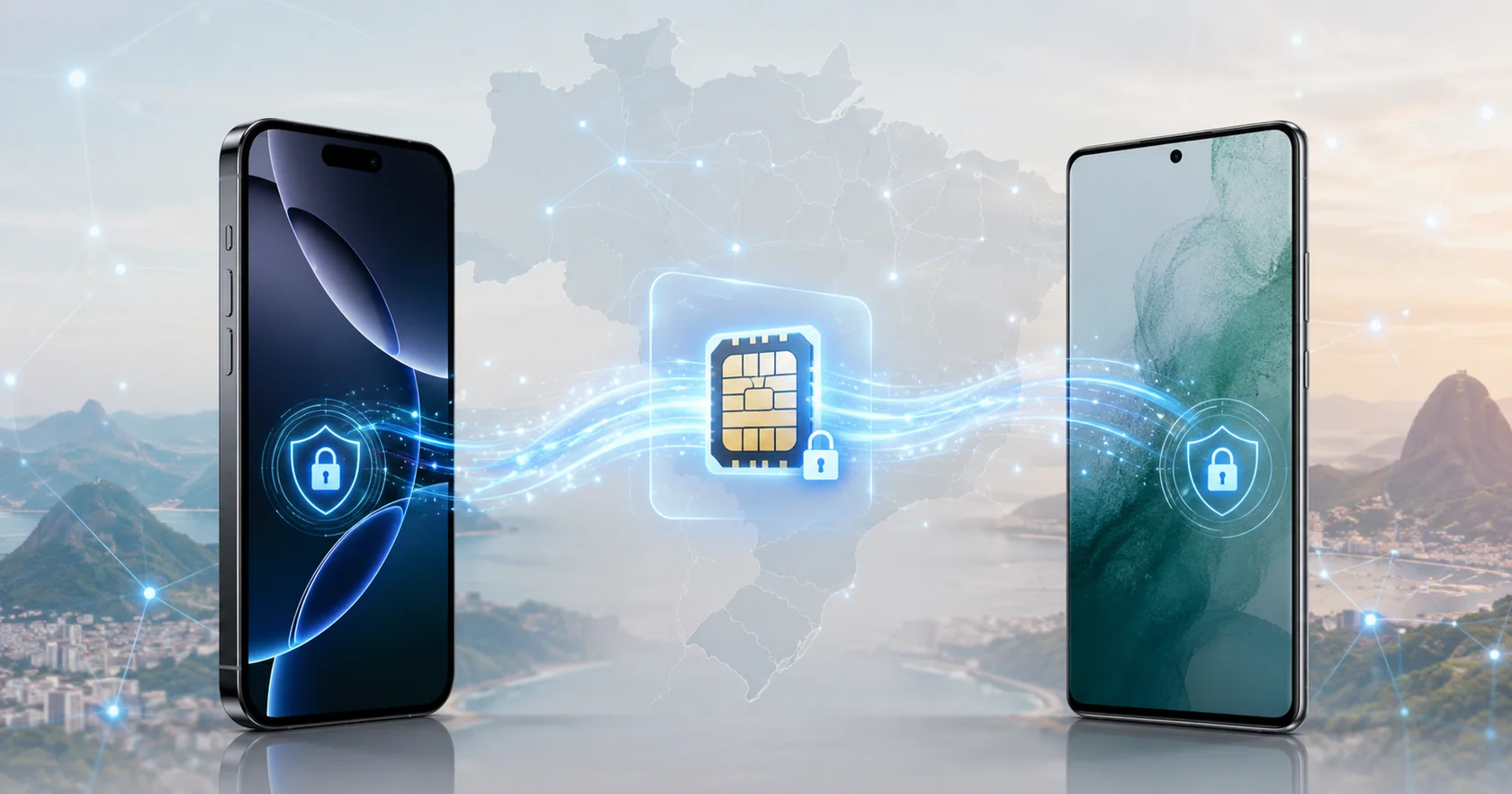
What TIM Brasil and HCLTech announced
HCLTech announced the project with TIM Brasil on 22 July 2026. The companies say subscribers will be able to move their digital mobile profile when buying a new phone, changing brand or switching operating system.
HCLTech describes it as the first capability of this kind in South America. The announcement itself does not provide independent evidence for that regional-first claim.
How the eSIM transfer is expected to work
The intended journey replaces a physical SIM swap or a complex manual reissue with a short on-screen transfer. HCLTech Device Entitlement Gateway will connect the phones and apps to TIM Brasil’s operator systems for eSIM activation and migration.
TIM Brasil has not yet published the customer interface, identity checks or exact sequence of steps.
What cross-platform transfer means
Cross-platform means the process is intended to work beyond one phone brand or one operating system. A subscriber should be able to retain the operator profile when moving to another manufacturer, provided both devices, their software and the TIM Brasil account meet the operator’s conditions.
It does not mean that every phone or eSIM profile will be compatible. The operator and both participating devices must support the transfer path.
What is confirmed
TIM Brasil selected HCLTech to implement a system intended to transfer eSIM profiles between devices and operating systems. The standard journey is meant to avoid a store visit and does not require moving a physical SIM.
HCLTech Device Entitlement Gateway is the stated technical foundation, and HCLTech says the transfer should take only a few on-screen actions.
What remains unknown
The companies have not published the mass-launch date, supported phone and operating-system list, permitted platform combinations, identity-verification flow, fees or transfer-frequency limits.
They also have not explained eligibility for prepaid, contract and business accounts, recovery after a lost or broken phone, or the process after the old profile has been deleted.
Does this apply to travel eSIMs?
No general travel-eSIM transfer is being announced. The system is for TIM Brasil operator profiles.
Travel eSIM rules depend on the seller. Some profiles can be reinstalled or moved, while others are tied to one device and require a replacement profile or support request after deletion. Check the seller’s rule before removing a travel eSIM.
Why eSIM transfer remains difficult
A physical SIM can normally be moved by hand. An eSIM profile is stored on the device and controlled by the operator’s digital systems, so migration depends on support in both phones, the operating systems, subscriber authentication, operator infrastructure and security against unauthorized number transfer.
If one part of that chain does not support migration, the customer may still need a new QR code, profile reissue or operator assistance.
What will change for TIM Brasil customers
Once the feature is broadly available, changing phones should require fewer manual steps, particularly when moving between manufacturers. Subscribers should not need to return to a physical SIM simply to retain their number.
Until TIM Brasil publishes the customer instructions, users should not delete the active eSIM or reset the old phone on the assumption that transfer will be automatic.
What to check before changing phones
Confirm that the new phone supports eSIM, the transfer feature covers both models, both operating systems are current, and the operator account, phone number, email and identity documents remain accessible.
Keep the old phone available until the new profile is active and mobile service works. Also check the recovery route if the transfer fails and whether the new phone is locked to another operator.
Why this matters to the eSIM market
Device migration remains a practical barrier to replacing physical SIMs. Customers expect their mobile number to move with apps and other personal data; a store visit or manual profile reissue weakens the convenience of a digital SIM.
The TIM Brasil project shows operators investing in the full profile lifecycle, including activation, device replacement, cross-platform transfer and recovery, rather than only initial eSIM issuance.